
What Probate Covers in Montcalm County
Probate is the branch of the court system that decides what happens to a person's property and personal affairs when they die or can no longer act for themselves. In Montcalm County, probate records cover estates, wills, trusts, guardianships, conservatorships, protected individuals, and mental-health proceedings. Michigan Legal Help, a high-authority legal aid resource, describes probate courts as administering estates and trusts, appointing guardians and conservators, and ordering treatment for people alleged to have a mental illness or a developmental disability. Each of those actions opens a case file that the Montcalm County court keeps.
Michigan runs three main trial courts: circuit, district, and probate. The Probate Court is a separate court, not a division of the others, and it hears these matters for all of Montcalm County. The 8th Judicial Circuit Court takes felonies and family cases, and the 64B District Court takes misdemeanors and traffic, but estates and guardianships belong to Probate. Contested mental-health commitment hearings also reach the Probate Court, where the prosecuting attorney appears. Divorce and marriage filings are handled elsewhere and show up on the Montcalm County marriage and divorce records page.
Probate Terms Defined
Probate paperwork leans on a handful of legal terms that repeat across nearly every file. Knowing them makes a docket far easier to read. The definitions below cover the words that come up most often in Montcalm County probate cases.
- Testator
- The person who made a will. A testator sets out how their property should pass after death.
- Executor
- The person named in a will to carry it out. In Michigan this role is usually called the personal representative.
- Intestate
- Dying without a valid will. State law then decides who inherits and in what shares.
- Guardianship
- A court arrangement giving one person authority over the personal and medical decisions of a minor or an incapacitated adult.
- Conservatorship
- A court arrangement placing a person's finances and property under the management of an appointed conservator.
- Fiduciary
- Anyone the court trusts to act for another, such as a personal representative, guardian, conservator, or trustee.
How to Search Montcalm County Probate Records
Montcalm County offers several paths to probate records, and the right one depends on whether the file is public and whether you need a certified copy. The fastest first stop is MiCOURT Case Search, the free statewide portal run by the Michigan judiciary. Depending on the court and case type, it can return probate cases alongside civil, criminal, and traffic matters. That same portal is explained in more detail on the Montcalm County court records page. When a document is not online, the probate clerk's counter, the phone line, and the e-filing system fill the gap.
Montcalm County's Probate Court page lists the court's staff, address, hours, and the legal-advice limitation that governs every contact with the office.
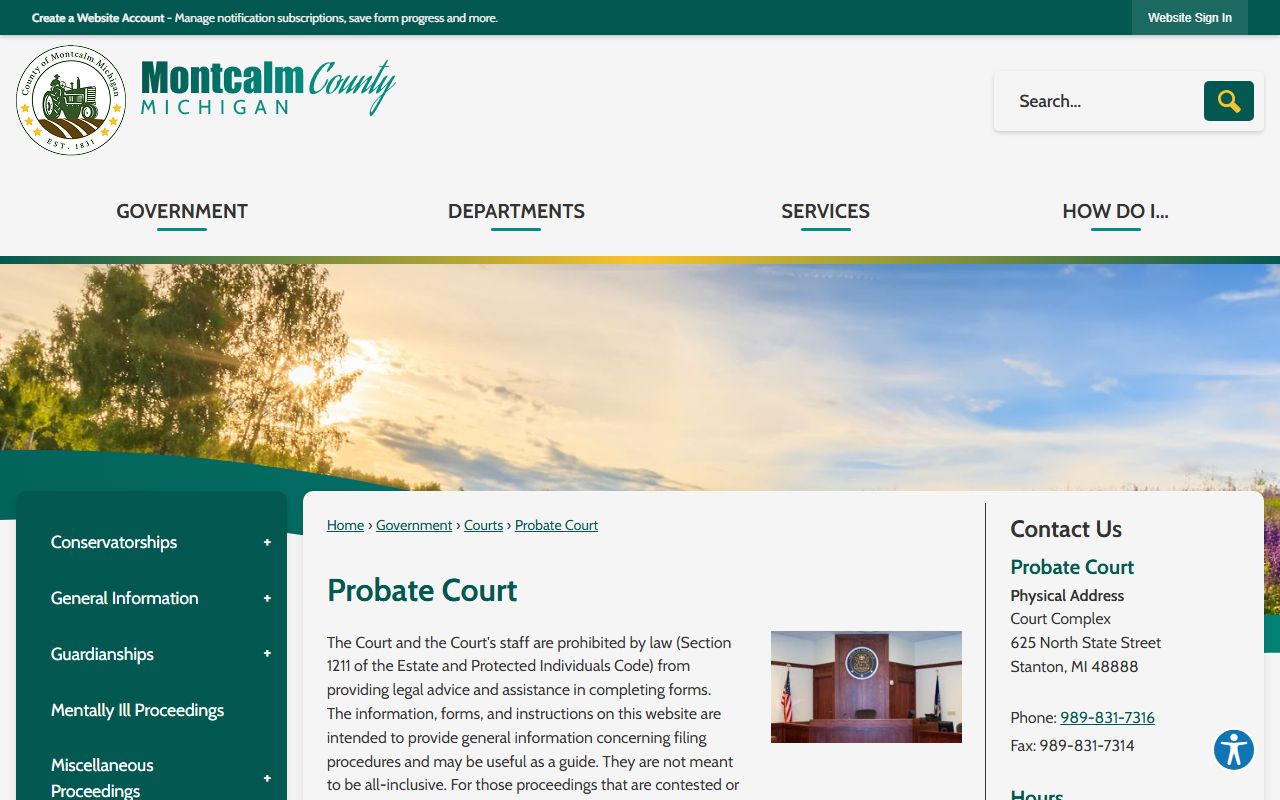
That page is the official starting point for confirming who to reach before a visit or a mailed copy request.
Electronic filing is another channel. Michigan's TrueFiling system lists Montcalm Probate Court among its available courts, so many documents can be filed through MiFILE. Rules change, though, so verify the current e-filing requirements with the Probate Court before you submit anything. If the file you want is public but not posted online, the clerk's counter at 625 North State Street remains the reliable route, and the phone line handles copy and status questions.
- Decide the case type. Estates, wills, and trusts, plus guardianships, conservatorships, and mental-health matters, all belong to the Probate Court.
- Search MiCOURT Case Search by party name or case number to see whether the file is public and online.
- If the record is not online, contact the Probate Court clerk by phone or at the counter for file and copy rules.
- For a certified copy, submit the request in person or by mail to the Probate Court clerk.
- To open a new matter, ask the court whether MiFILE electronic filing is required before you send paper.
Montcalm County Probate Court Contact
The Probate Court sits in the Montcalm County Court Complex along North State Street in Stanton, a short walk from the other court offices. Chief Judge Charles W. Simon III leads the court. Karla A. Davis serves as Probate Register, Amy Johnson as Deputy Probate Register, and Chalice O'Green as Probate Court Clerk. Use the contact details below to reach the clerk about a specific file, a copy request, or a filing question.
Montcalm County Probate Court
Court Complex, 625 N State St
Stanton, MI 48888
989-831-7316
Fax 989-831-7314
Jury line 989-831-7356
Monday to Friday, 8 a.m. to 4 p.m.
How Montcalm County Probate Cases Proceed
A probate matter follows a fairly set path from opening to closing, even though the details change with the case type. The steps below show how an estate or a guardianship generally moves through the Montcalm County Probate Court.
- Identify the matter as an estate, will, trust, guardianship, conservatorship, or mental-health proceeding.
- Search MiCOURT to check for an existing case before opening a new one.
- Use the SCAO Michigan Courts forms that fit the matter.
- File with the Probate Court clerk at 625 N State Street, or through the required e-filing system.
- Attend hearings before the probate judge, who issues orders such as letters of authority appointing a fiduciary.
- Do not ask court staff to complete forms or choose a legal strategy for you.
Important: Probate Court staff are barred by law, Section 1211 of the Estate and Protected Individuals Code, from giving legal advice or helping complete forms. The county notes that its posted instructions are general guidance and not all-inclusive, and that contested or complex matters should be discussed with an attorney.
Court orders in Montcalm County carry real legal force once a judge signs them, whether the order appoints a guardian or, as on the county's work release information page, sets the terms of a defendant's custody.
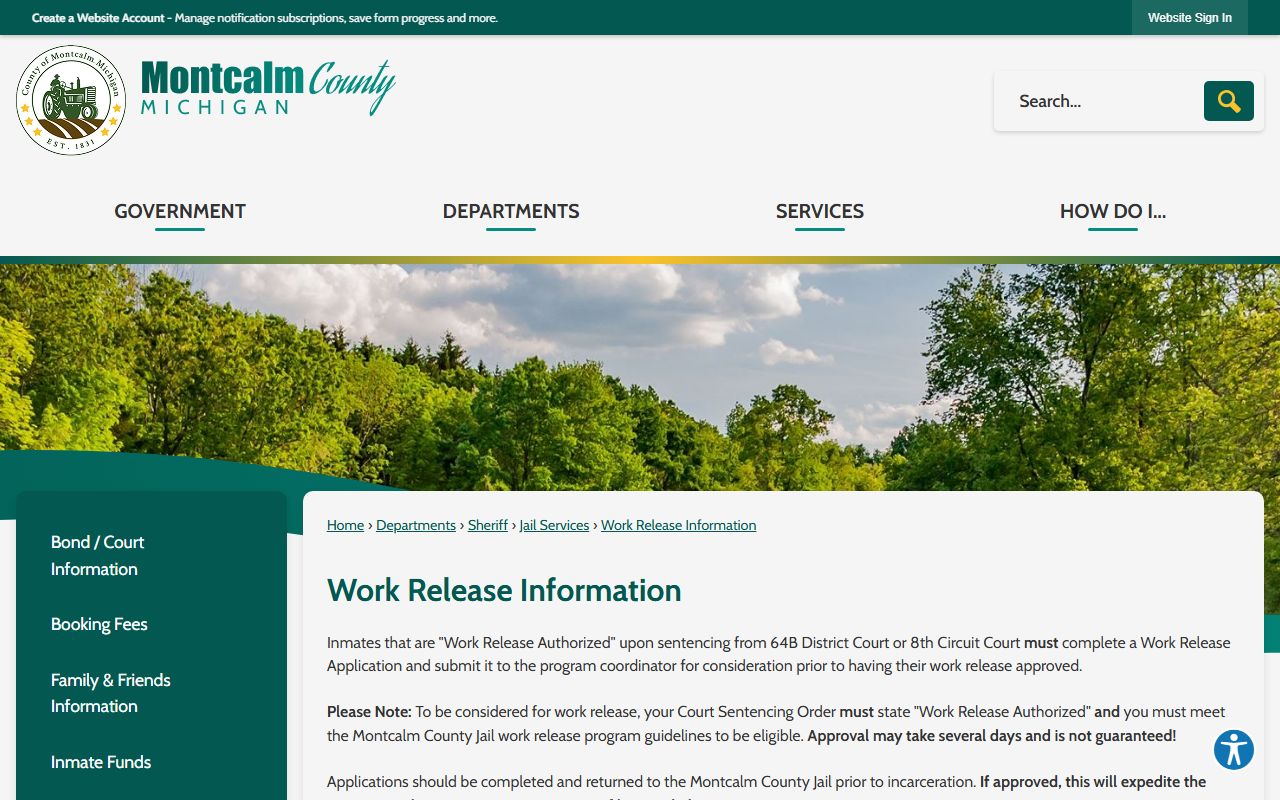
Probate orders work the same way, granting a fiduciary the authority to act only after the judge enters them on the record.
What Montcalm County Probate Records Show
A Montcalm County probate file is a running record of everything the court did in the matter. Opening the docket shows the petitions, orders, and reports filed over the life of the case. The table below lists the fields most often used to find and read a probate record.
| Field | What It Shows |
|---|---|
| Case number | Used for lookups and clerk copy requests |
| Estate or protected person name | The person whose estate or care is at issue |
| Case type | Estate, trust, guardianship, conservatorship, or mental health |
| Filing date | The date the probate matter was opened |
| Fiduciary | The personal representative, guardian, conservator, or trustee |
| Judge or register | The probate judge or register handling the case |
| Docket or register | Petitions, orders, letters of authority, inventory, and accountings |
| Restrictions | Mental-health or protected-person details that may be sealed |
The register of actions is the heart of the file. It tracks the letters of authority, the estate inventory, and the accountings a fiduciary must submit, so it shows both who is in charge and how the assets are being handled.
Note: The online docket can lag the paper file, so call the Montcalm County Probate Court clerk to confirm the latest orders before relying on a printout.
Montcalm County Probate Fees and Copies
Copy and filing costs are set by the court, and a Montcalm-specific probate fee schedule was not published on the official pages reviewed. For that reason, the safest step is to contact the Montcalm County Probate Court for current fees before you mail a request or arrive at the counter. Ask about the charge for a plain copy, for a certified copy, and for any application or filing fee that applies to your matter.
Many county costs in Michigan are fixed directly in state law and published online by the Legislature, such as the county jail booking fee set out in MCL 801.4b.
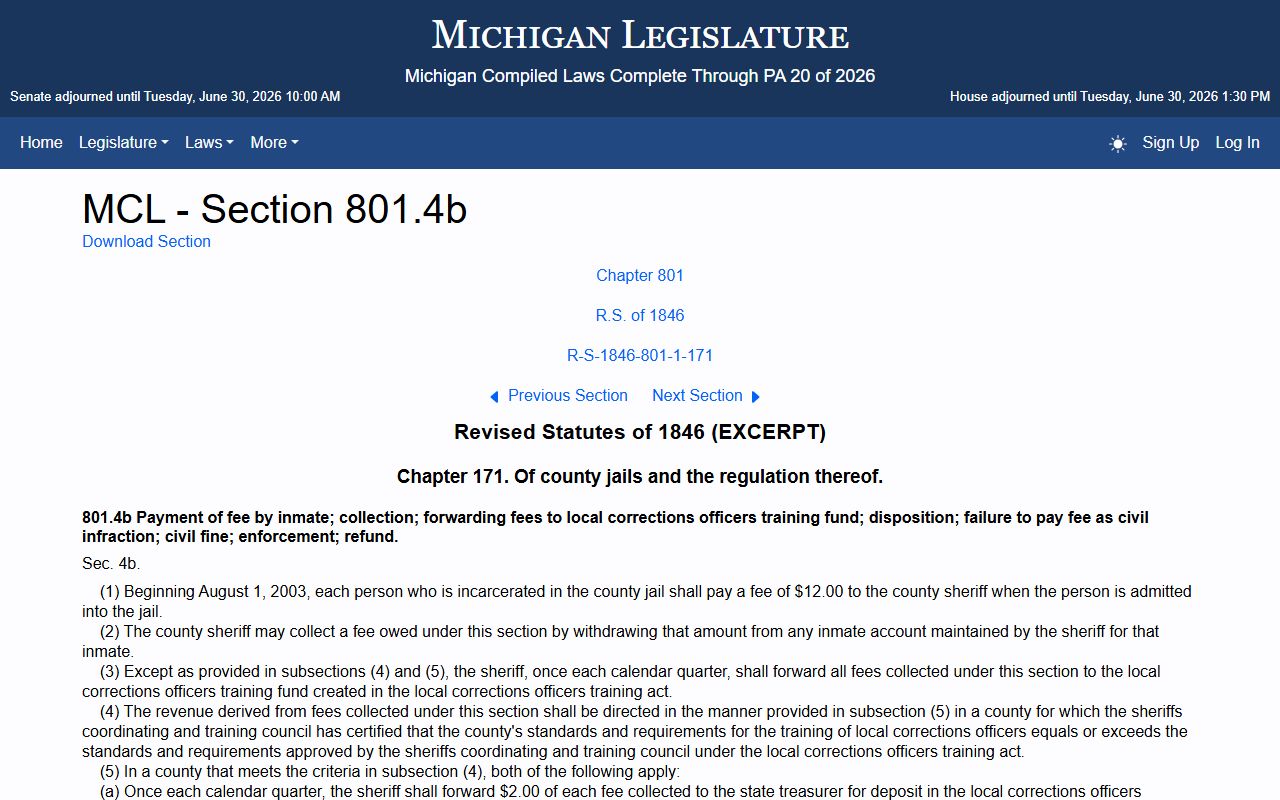
Probate charges, by contrast, were not posted in a single public schedule for Montcalm County, which is why a direct call to the clerk is the reliable way to confirm an amount.
Certified copies matter because courts, banks, and title companies usually will not accept a plain printout for legal purposes. When a fiduciary needs to prove authority, a certified copy of the letters of authority is normally required, so it is worth confirming that specific fee up front.
Restricted Montcalm County Probate Records
Not every probate document is open to the public. Michigan law and court rules restrict access to the most sensitive material, and Montcalm County warns that non-public files never appear in the online portal. Guardianship, mental-health, and protected-person records often contain nonpublic details, so a single case may be partly viewable and partly closed.
Mental-health commitment proceedings are the clearest example. The Montcalm County Probate Court and the prosecuting attorney both handle these hearings, and the medical and personal information in them is generally protected. Records involving a minor under a guardianship, and financial details about a protected adult under a conservatorship, may also be limited. Finding a case number does not mean the full file is available.
Access also depends on which office holds the file. Court case records come from the Probate Court clerk that maintains them, while records belonging to an executive agency, such as the sheriff, follow a separate public-records process. That split matters when a probate matter overlaps with a criminal or protective case.
When access is unclear, the Montcalm County probate clerk can say what is releasable. The clerk cannot, however, interpret the record or advise on what to do next.